A long, damp winter is finally coming to an end. The daffodils have been out for some time and blackthorn is in flower in the hedges which line England’s roads, spraying them white.
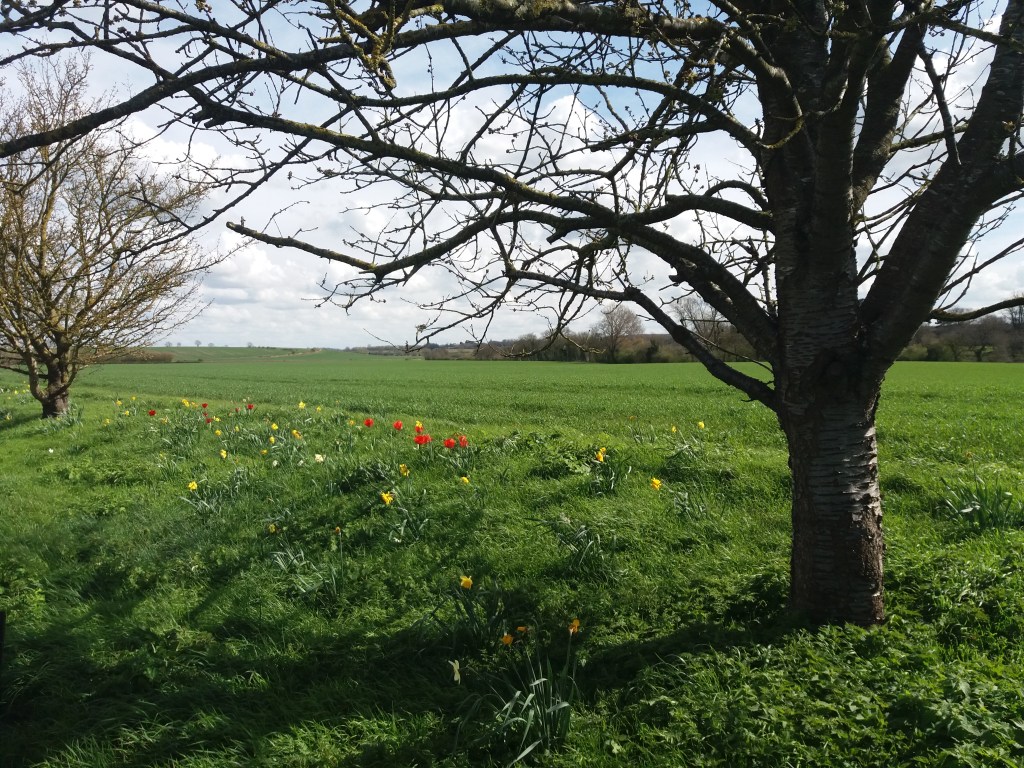
I took this picture on a bike ride the Saturday before Easter on the edge of Gamlingay near Cambridge. That part of the country is almost flat and heavily farmed and the towns and villages have wonderful names: Potton, Dutton, Sutton, Gamlingay, Wrestlingworth. I’ve been cycling regularly through it, all winter, and at last the plants are visibly growing again.
It’s hard to look at the much-storied English countryside nowadays, from a privileged perch like mine, and not worry about the climate emergency (the flowers were early this year) or the harms of industrial agriculture, or rural poverty or many other problems. But you can, with an effort, push that aside and look at the trees coming back into leaf and the carpets of flowers and the red kites – a conservation success story – which circle above the road like so many giant biplanes. A ride rarely passes without seeing half a dozen of them.
Spring is the best time to be out and about on the English landscape. There’ll be March hares and even the odd deer sprinting into cover as you come close. As well as the red kites there are buzzards and smaller birds of prey. In places you hear flocks of sparrows in the hedges – not as many as less-farmed France, where they can be deafening, but still loud.
Despite the grim state of the country and all the uncertainties about what comes next, Spring still feels like an ache-relieving injection when the sun is out.

 Puck
Puck 